I. Kairos Against the Tyranny of the Clock
The project known as Applied Wonder begins from a quiet but radical premise: that much of modern suffering is not pathological in the narrow clinical sense, but chronometric—a malaise induced by life lived almost entirely inside Chronos, the metronomic time of deadlines, deliverables, optimization, and instrumental reason.
Applied Wonder proposes, instead, the deliberate staging of Kairos: moments of qualitative time in which meaning condenses, salience spikes, and the psyche briefly slips its administrative leash. These are not accidents of grace, but designed thresholds—portals engineered to breach the chrysalis of strict chronometry and reintroduce the nervous system to effervescence, synchrony, and felt significance.
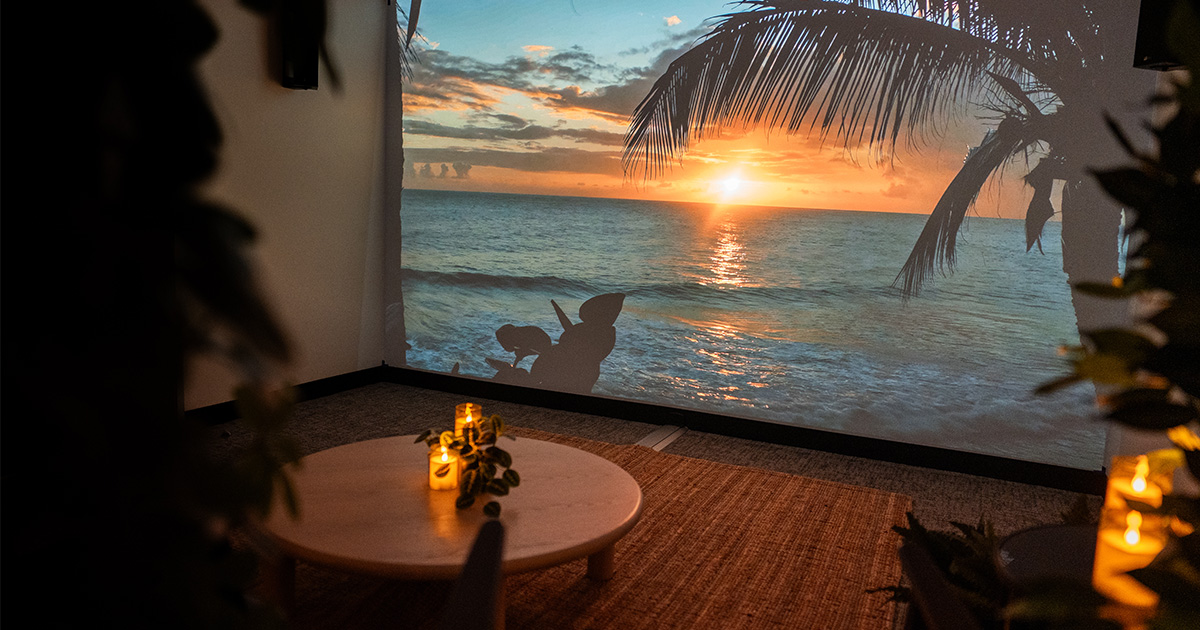
Applied Wonder Experience (AWE) inside a room-scale physical environment.
II. Rock and Roll as Secular Rite
One of Applied Wonder's founders arrives at this work through the long apprenticeship of touring music. Rock and roll, especially in its mid-century eruption, functioned as a non-denominational sacrament: a pelvic, cardiac, and collective liberation that pulled an entire generation out of square posture and into embodied yearning.
This was not mere entertainment. As Durkheim might have recognized, it was collective effervescence—a temporary dissolution of the isolated ego into rhythmic communion. Applied Wonder treats this history not nostalgically, but diagnostically: as evidence that mass culture once reliably generated altered states of belonging, vitality, and catharsis without recourse to doctrine.
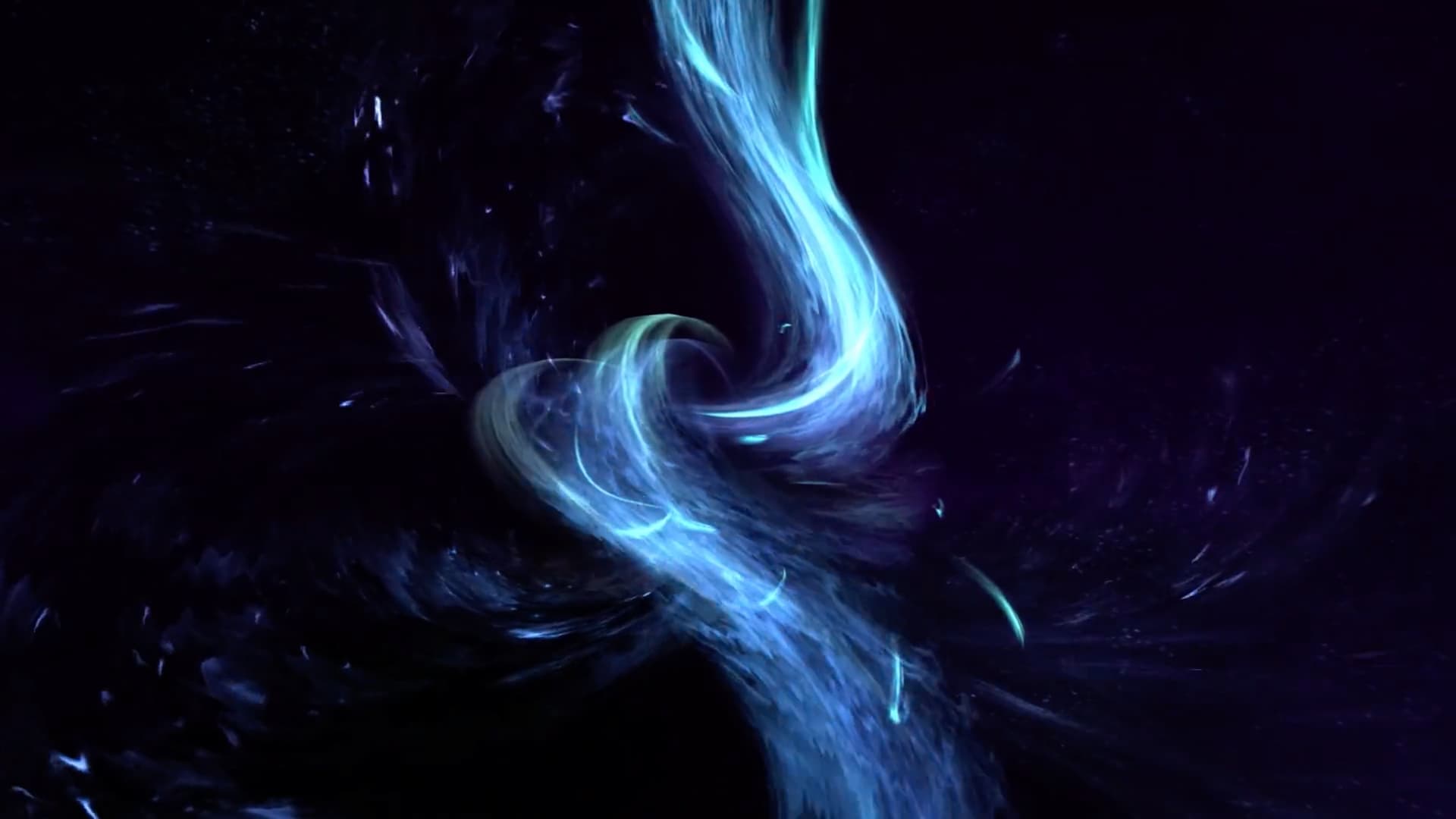
"Light" produced by Jacob Marshall while on tour with MAE.
III. Wonder as a Psychophysiological Technology
The second founder—whose very name evokes the sparkle of light striking water—brings a complementary sensibility: intuition disciplined by scholarship, somatics braided with systems thinking. Together, they approach wonder not as a vague feeling but as a trainable state with measurable correlates.
Contemporary affective neuroscience supports this intuition. Experiences of awe and wonder reliably down-regulate default-mode rumination, increase vagal tone, and promote parasympathetic dominance—conditions associated with trauma release, emotional flexibility, and social openness. Polyvagal theory, trauma-informed somatics, and research on aesthetic absorption all converge on the same insight: the body must feel safe before the psyche can play.

Thomas Wilfred's Lumia compositions exhibited at Yale act as practical catalysts, utilizing ethereal light to induce the specific state of awe and parasympathetic safety.
Photo credit: Jessica Smolinski, Yale University Art Gallery
IV. Ontological Design and the Staging of Gnosis
Applied Wonder situates itself within the lineage of ontological design—the recognition that environments do not merely host experience but actively shape being. Like immersive theatre innovators before them, they refuse the proscenium separation between performer and audience. But where immersive theatre often pursues narrative intensity, Applied Wonder pursues state change.
Music, spatial choreography, costume, pacing, silence, absurdity, and ritualized play are composed as one might compose a score—each element a lever on attention, affect, and meaning-making. The result is not indoctrination but permission: a carefully scaffolded invitation to re-enter the body, the group, and the present moment with childlike seriousness.
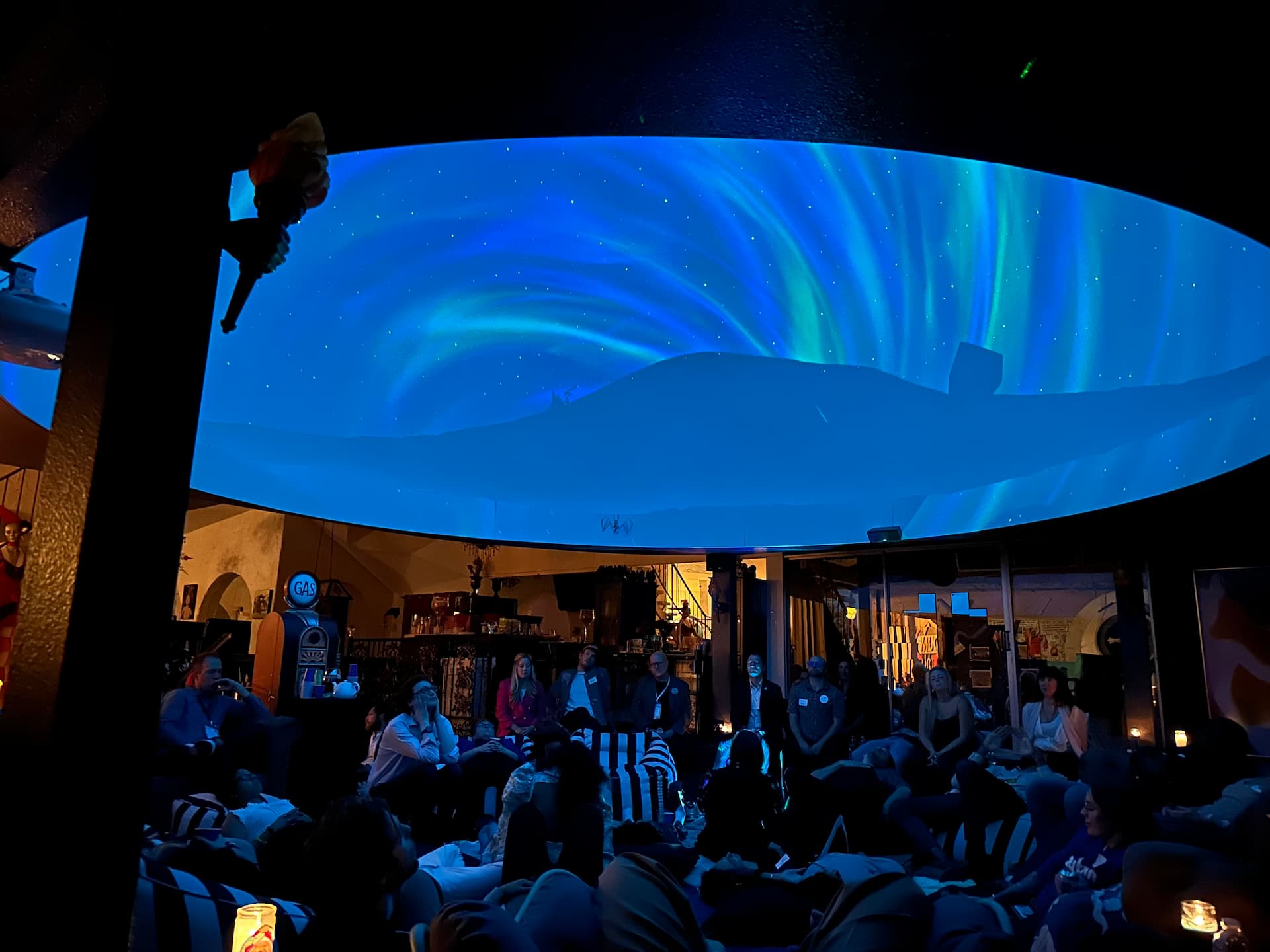
Early dome experience brought in for conference attendees.
V. Scholarship Without Sterility
Crucially, Applied Wonder does not abandon rigor in its pursuit of rapture. Its discourse draws from systems theorists who understand emergence, psychologists who study peak experience and post-traumatic growth, mythologists who map the perennial grammar of initiation, and neuroscientists who chart the bodily correlates of safety, play, and awe.
This is scholarship in service of aliveness, not abstraction. One hears echoes of the great popularizers of cosmic wonder—those who understood, as one astronomer famously put it, that science is not only compatible with spirituality; it is a profound source of it. Or, as a fictional radio astronomer once lamented after touching the ineffable: they should have sent a poet.
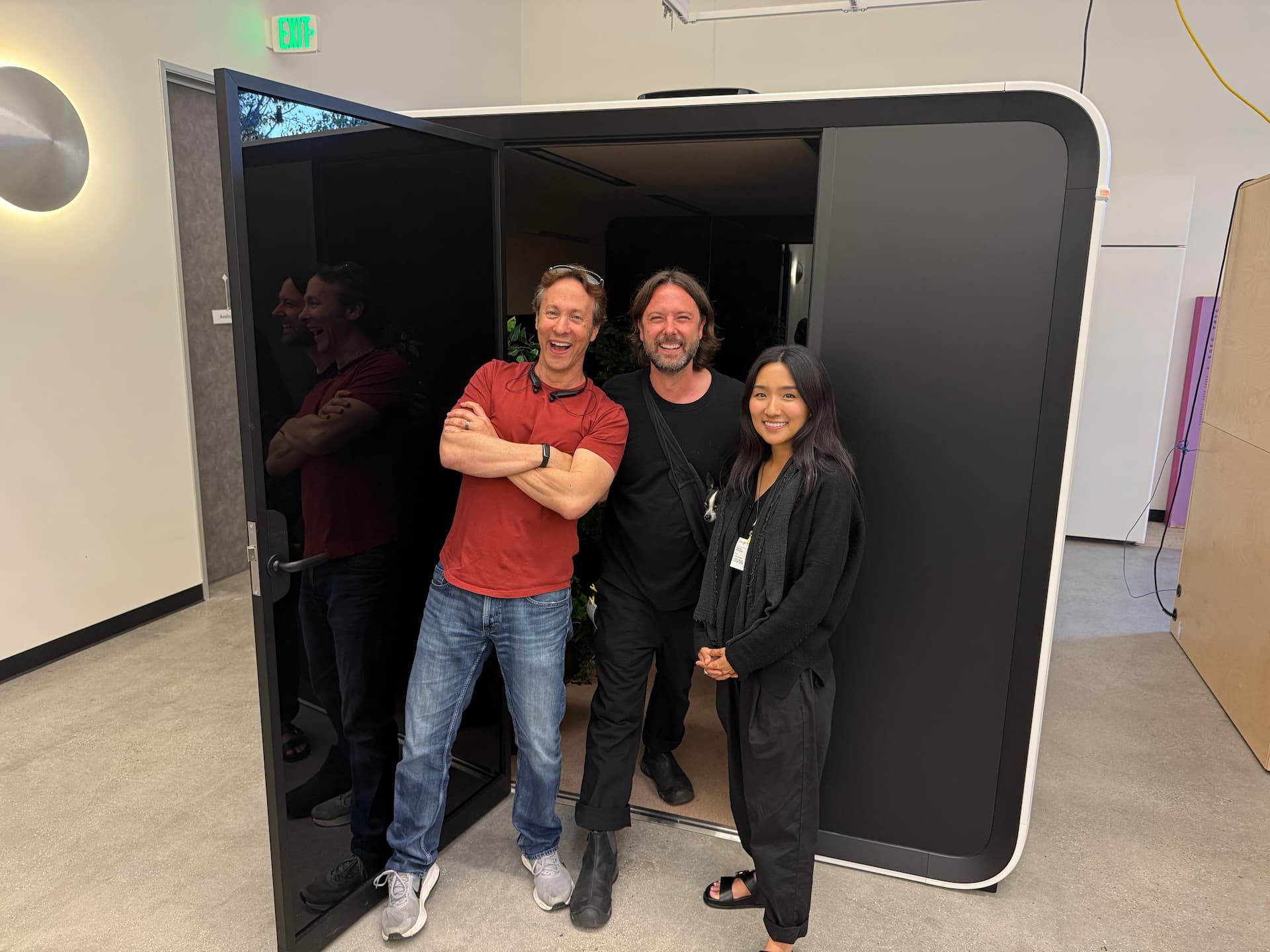
Neuroscientist Dr. David Eagleman with Jacob and Hae-jin Marshall viewing an environment.
VI. Applied Wonder as Companion Practice
In this sense, Applied Wonder stands as a companion project to Sacred Derangement: both argue that healing in the 21st century will require more than pharmacology or cognitive reframing. It will require designed ecstasies, stewarded spaces where the nervous system remembers how to soften, the imagination remembers how to play, and the self remembers it is more than a résumé with symptoms.
Applied Wonder does not promise transcendence on demand. It promises something subtler and more durable: conditions under which enchantment becomes plausible again.
That—or, as the old cosmic wager goes—your money back.
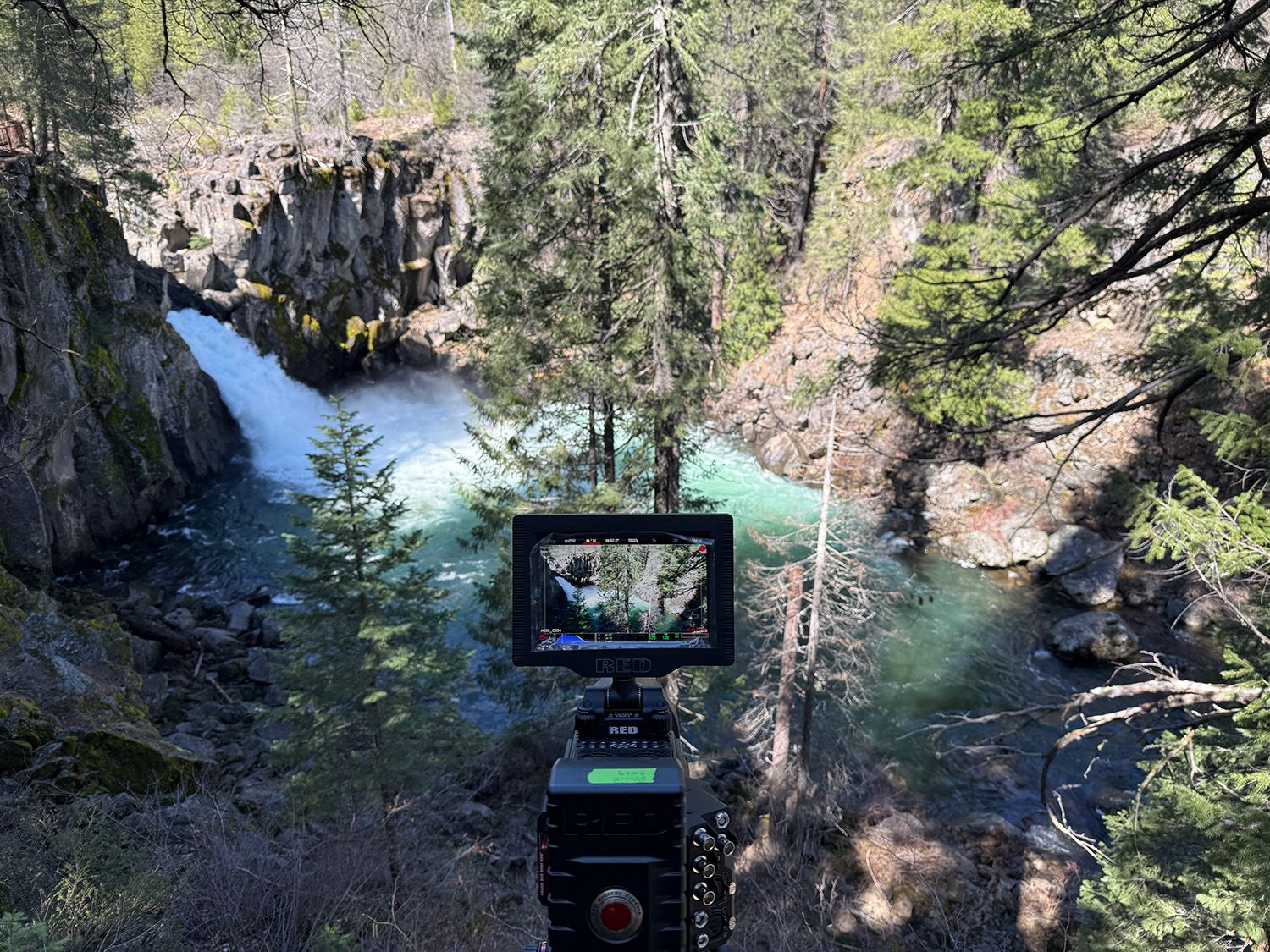
Applied Wonder team on-location capturing multisensory elements.